
History & Architecture
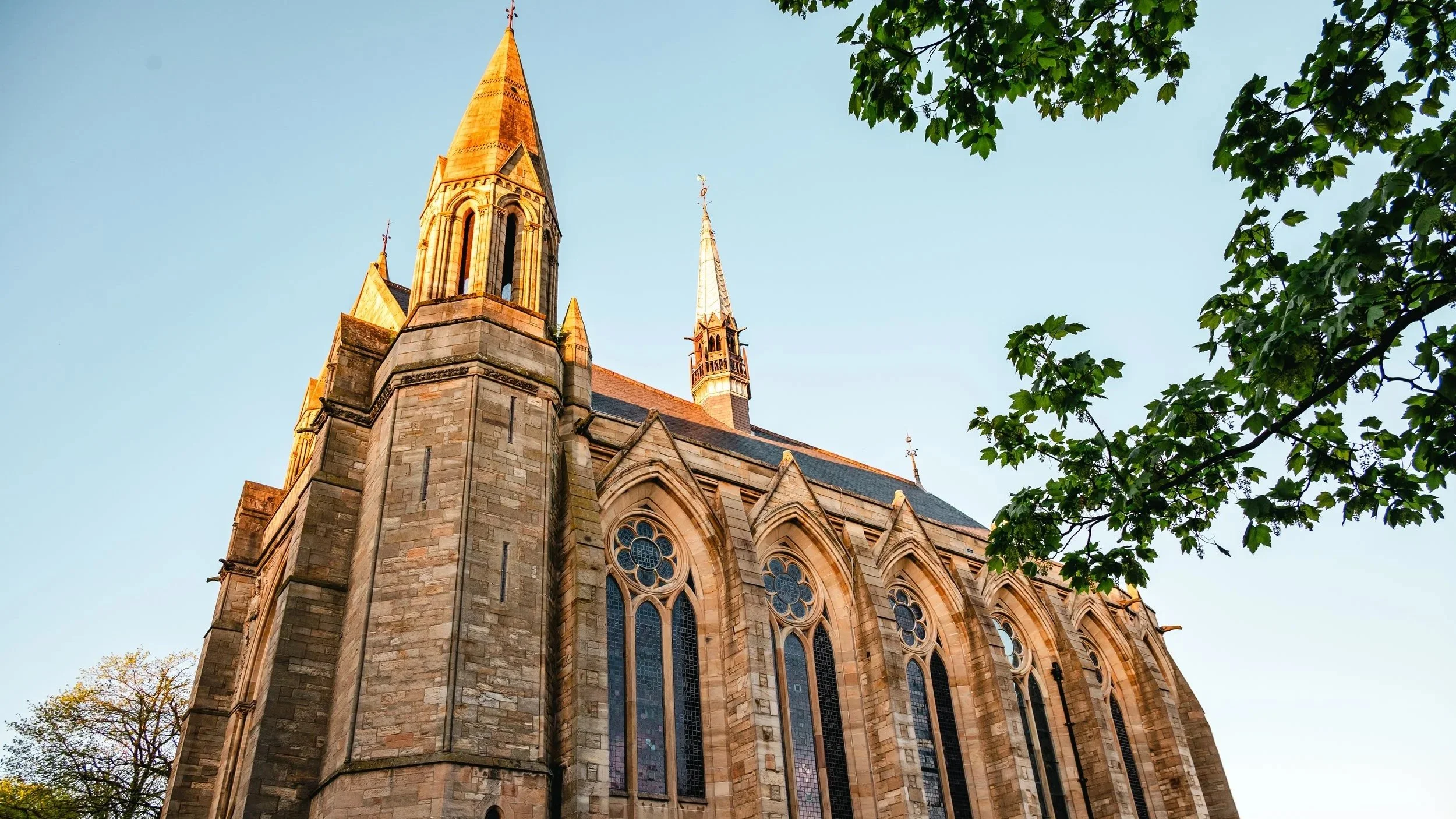
We love our building and we know that for visitors it always has a wow factor - reflected in its ‘A’ listing from Historic Scotland. Glasgow is famous for its fine Victorian architecture and our church, completed in 1876, is part of that great heritage. Originally known as Hillhead Parish Church, it was designed by James Sellars, who modelled it on the Gothic masterpiece of The Sainte Chapelle in Paris, an influence you see in the tall, elegant windows with their fine stained glass. It was built, funded by local subscriptions, to replace an older iron church in the fields which then existed to the west of Byres Road.
The design and layout of the church reflects the influence of what was called the Scoto-Catholic Movement, part of a 19th century drive to renew the life and worship of Protestant and Catholic churches called the Liturgical Movement. This aimed to draw inspiration from the architecture and worship of churches in earlier centuries, creating spaces in which people could sense the beauty and presence of God. In our case, this meant commissioning a beautiful building with inspiring architecture, installing stained glass by the finest artists of the day, placing a marble communion table at the East End of the church and, unusually for a presbyterian church, adding a baptistry near the front door. Originally the Church had coloured stencils around the walls and you can see a small area on the south wall, where an example of these has been preserved.
The Exterior
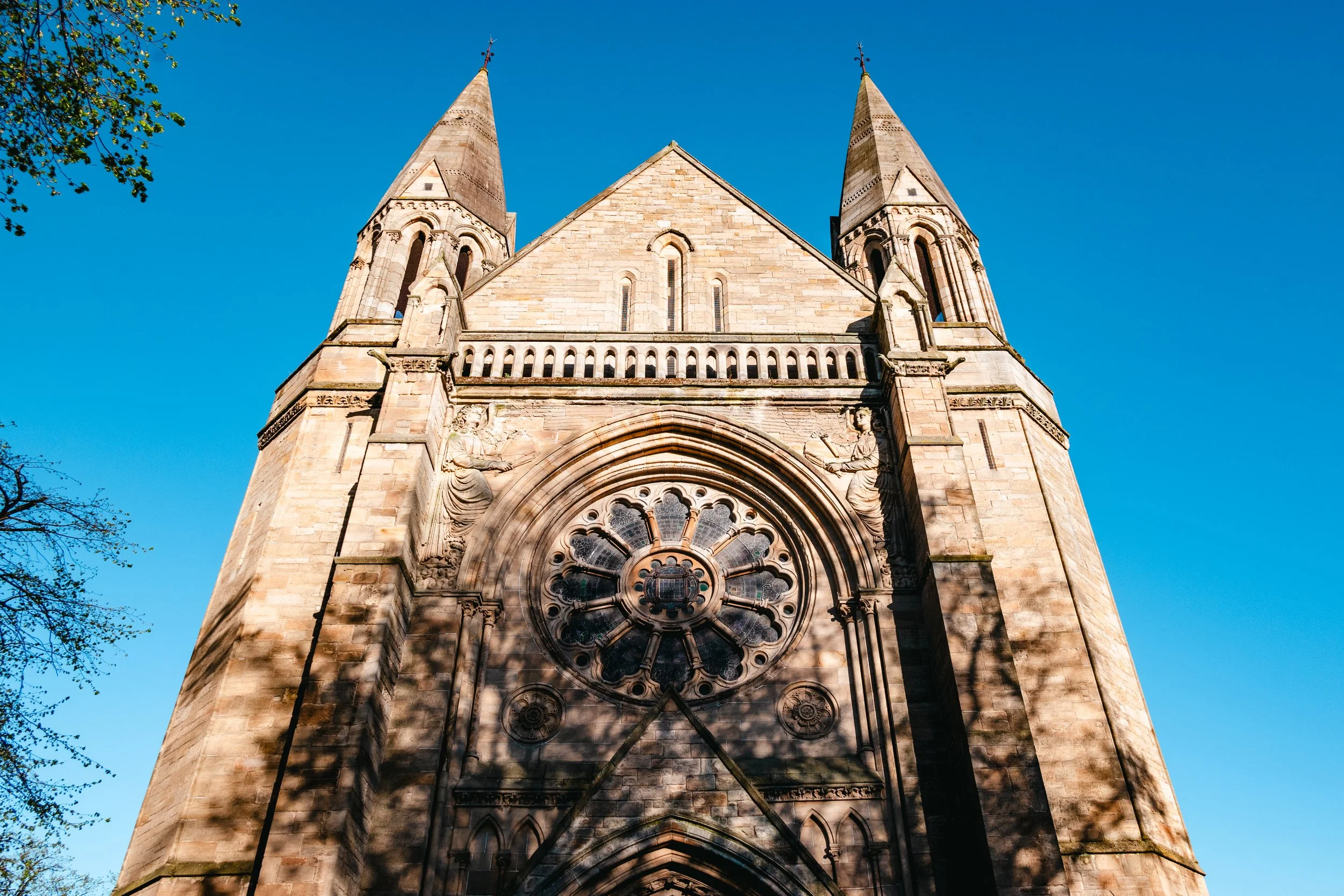
The west-facing front facade has a superb rose window flanked by relief sculptures of angels. Like Saint Chapelle in Paris, which was its inspiration, there are fine twin octagonal towers and on the apex of the roof soars the delicate third spire or flèche. The whole structure is supported on piles driven through the old mine workings which once covered this part of the West End.
The church measures 110 feet long by 48 feet wide and can seat 800 people. The roof is 60 feet high, groin vaulted in wood and unsupported by any internal pillars.
The Interior
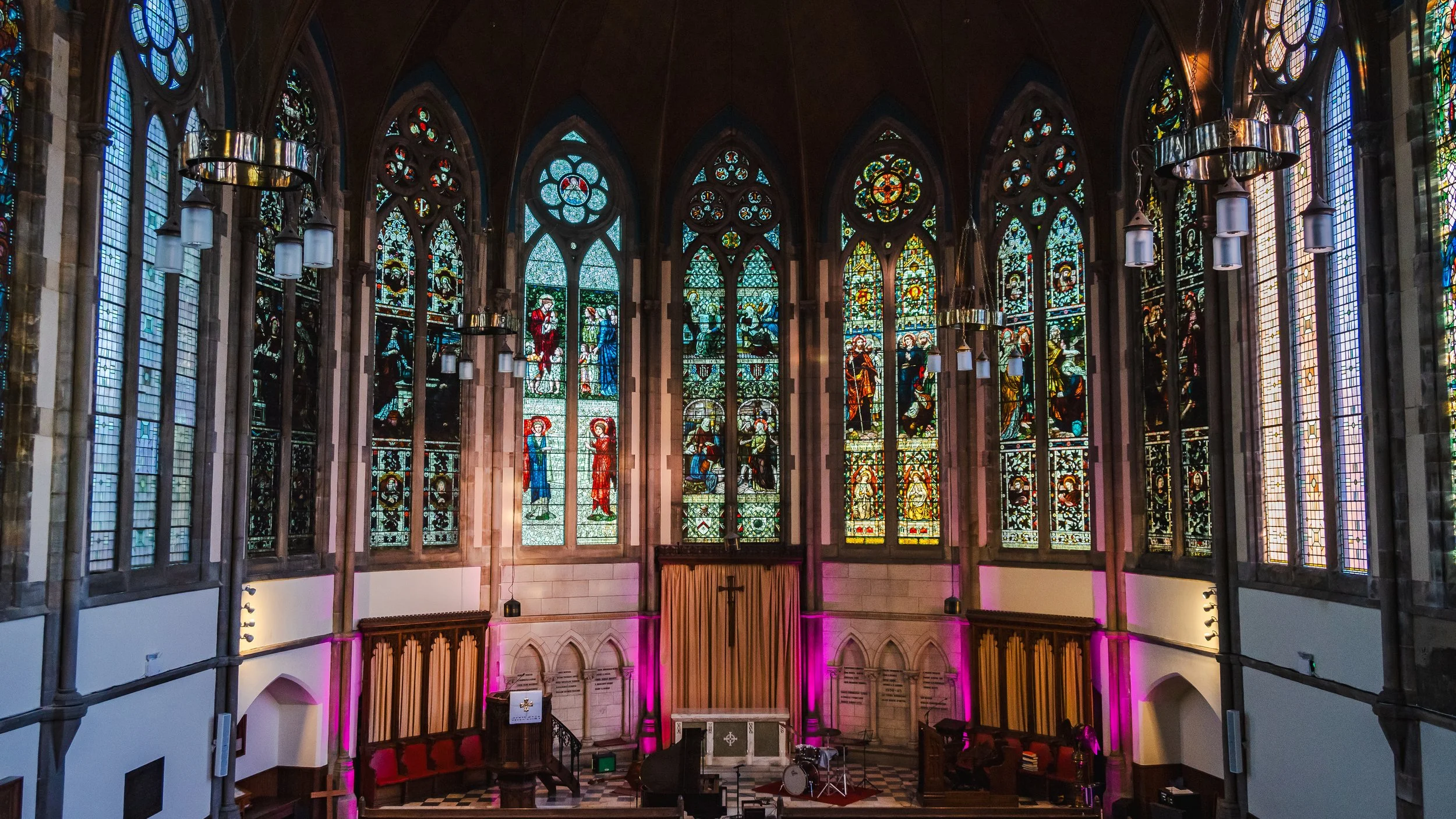
The Baptistry, to the left of the entrance, was added in 1926. The marble font has carved shields on its eight sides showing Alpha, Omega, IHS, a Celtic cross, Chi Rho, a dove, a Maltese Cross and a hand symbolising the Trinity. The font is surmounted by an ornate wooden canopy counterbalanced to enable it to be raised when the Baptistry is in use. The attractive small stained glass windows in the alcoves at the Wes end of the church date from 1928.
The Pulpit is of Austrian oak in late Gothic design, erected in memory of Dr David Strong, first minister of Hillhead Church. In the alcove to the left is the Book of Remembrance from Kelvinside Botanic Gardens Church (now Oran Mor) and the Charred Cross of Bangladesh, brought from India by a mission partner.
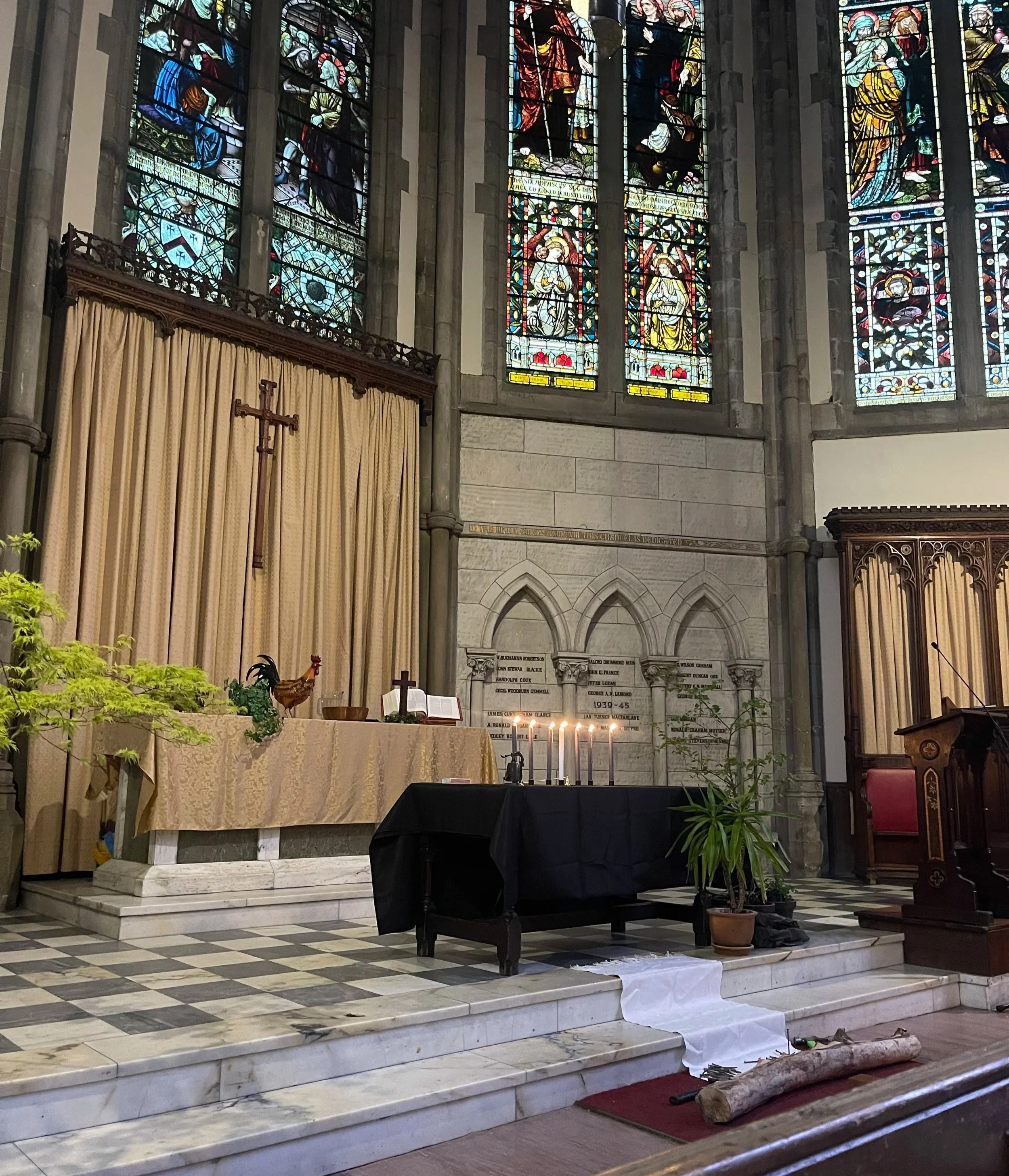
The communion table is a striking feature, of a size and quality fit for a cathedral. Designed by MacGregor Chalmers in 1921, it is made from Rochetta Marble – and for that reason alone is unlikely to be moved anytime soon.
The eastern wall was adapted in the 1920s to act as a war memorial, in memory of those who died in World War I.
The brass light fittings now carry elegant modern low energy lighting. The choir stalls and some of the decorative woodwork at the front, as well as the entrance porch, were added in the 1920s and they, alongwith some pews, may be relocated under future plans to return the chancel to its original character. The organ, in the gallery, is a magnificent example of the work of Henry Willis, built in 1876 and enlarged in 1930. It has three manuals, 48 stops and 24 couplers. It is still in use and sounding good, but is now in need of major restoration, which will be enormously expensive and will require major grant funding if it is to go ahead.
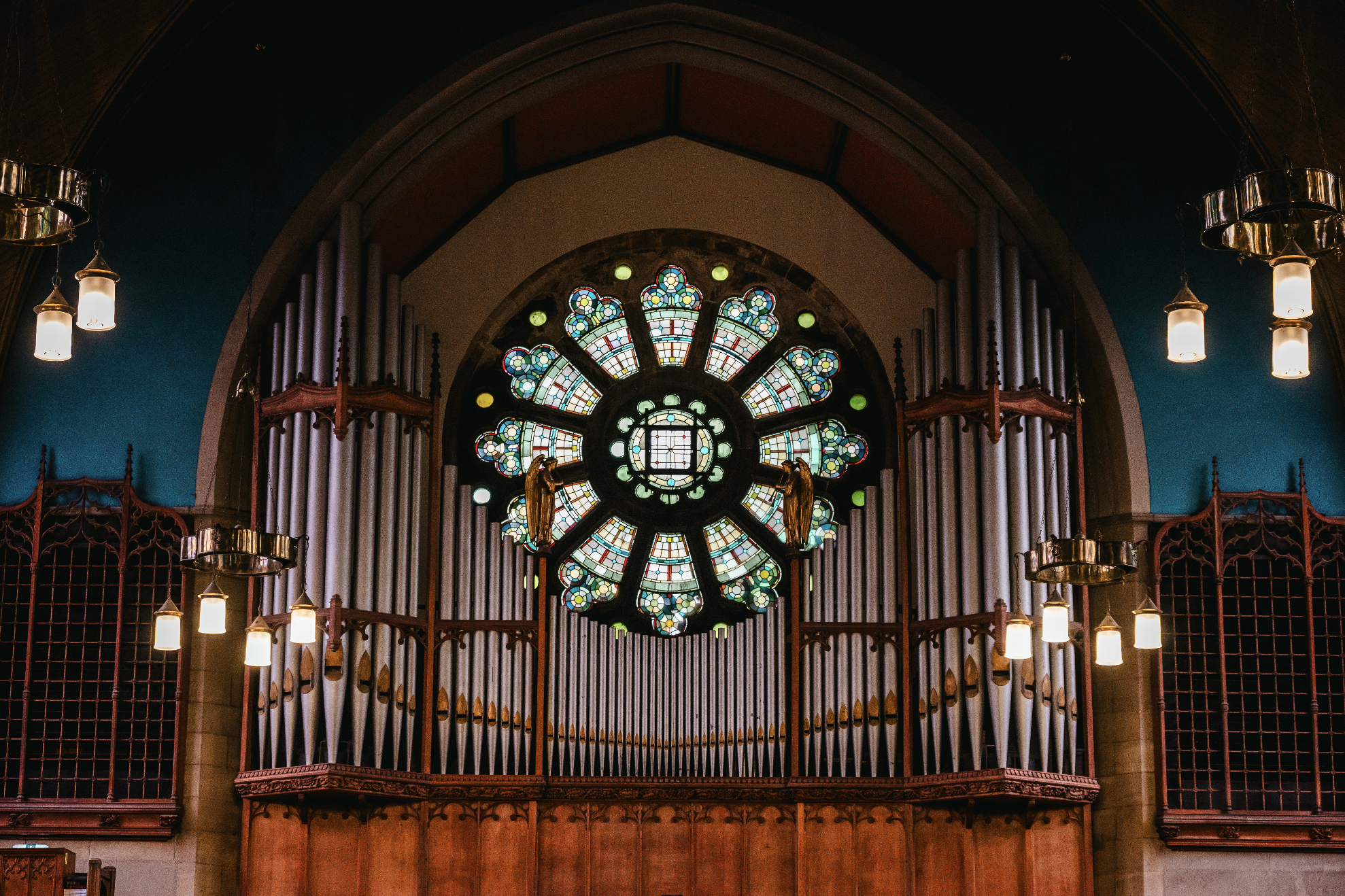
The Apse Screens of oak, with battlemented cornices and scrolled vines, depict from left to right:
A winged man with a book, symbol of St Matthew, and a winged lion, symbol of St Mark.
St Andrew’s and St George crosses on a background of the Thistle and the Rose.
The Burning Bush, St Constantine and the bell, fish, bird and tree of the arms of Glasgow.
The nails and crown of thorns with the monogram IHS, Jesus Hominum Salvator.
Symbols of bread and wine representing Communion.
The pelican feeding her young and the phoenix rising from the ashes symbolising immortality and resurrection.
Oak and acanthus scrolls representing faith and virtue.
The eagle and ox, symbols of St John and St Luke.
5. Christ Protesting the Truth to Pontius Pilate (by Shrigley & Hunt 1893). The groundwork consists of pomegranate leaves and fruit. The prophets who spoke of the Messiah are also depicted: Jeremiah and Daniel on the left, Ezekiel and Isaiah on the right.
6. Jesus Refusing the Request of James and John to Call Down the Fires of Heaven on a Samarian Village (by Cottier, 1893). This symbolises the desire to save life, not destroy it. The background is of lemon branches, Alpha and Omega, sunflowers, a cross and angels.
7. Jesus at the Grave of Lazarus with Martha and Mary (by Cottier, 1893). A friend or family member points to the grave. Also shown are the four Evangelists and cherubs holding scrolls of Faith, Hope and Charity.
8. Jesus Turning Water into Wine at the Marriage in Cana (by Cottier, 1893). Appropriately, the background is of vines and grapes. The ship is to carry the faithful over the sea of life.
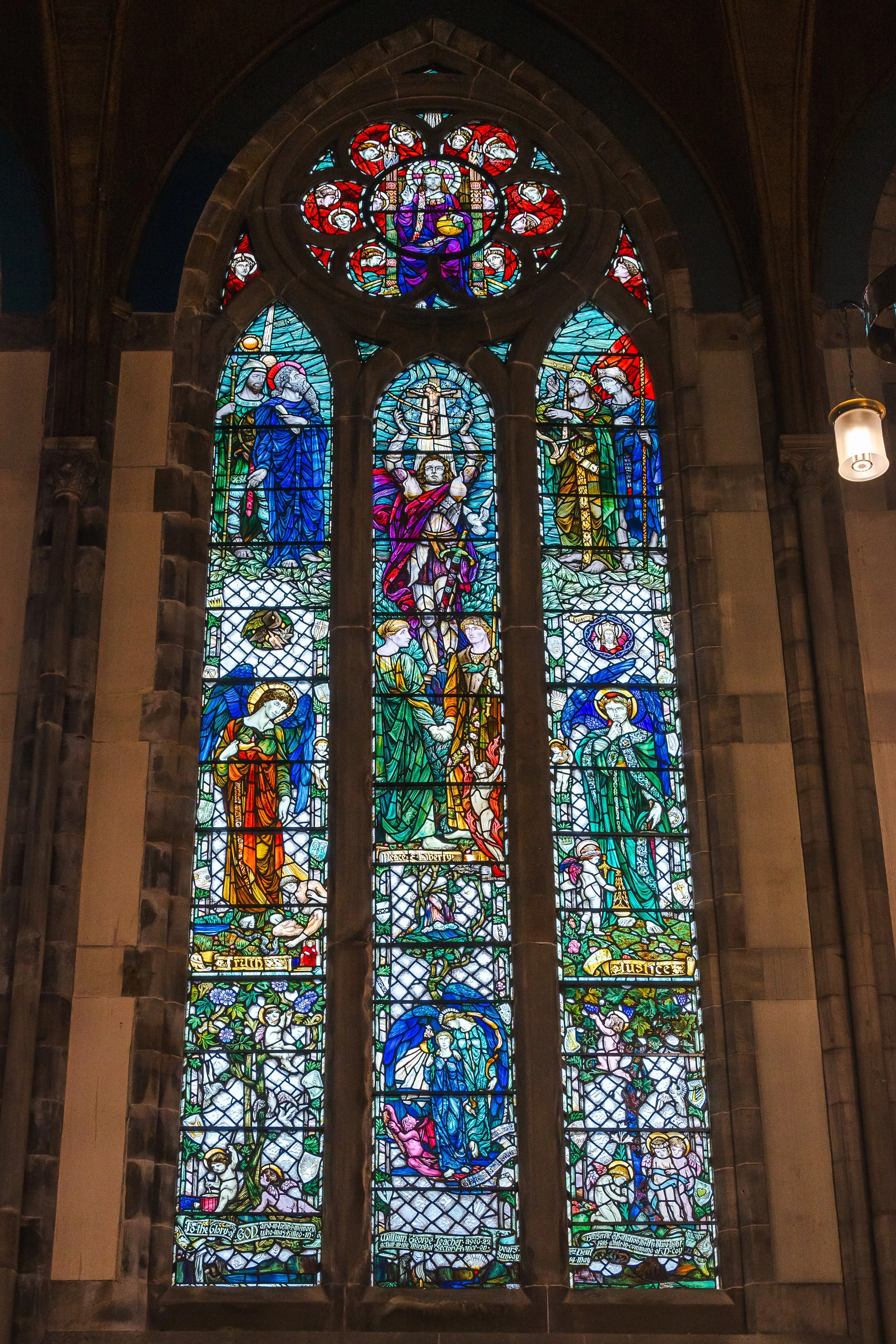
9. The Triumph of Right and Justice Over the Powers of Evil (by Meikle, 1917). The window was presented in memory of Lt. William Teacher.
The Stained Glass
Half way down the left side of the church is the vestry door, round which has been rebuilt the former Belmont Church War Memorial. Above this is the first of the Main Stained Glass Windows. In clockwise order, the nine windows are as follows:
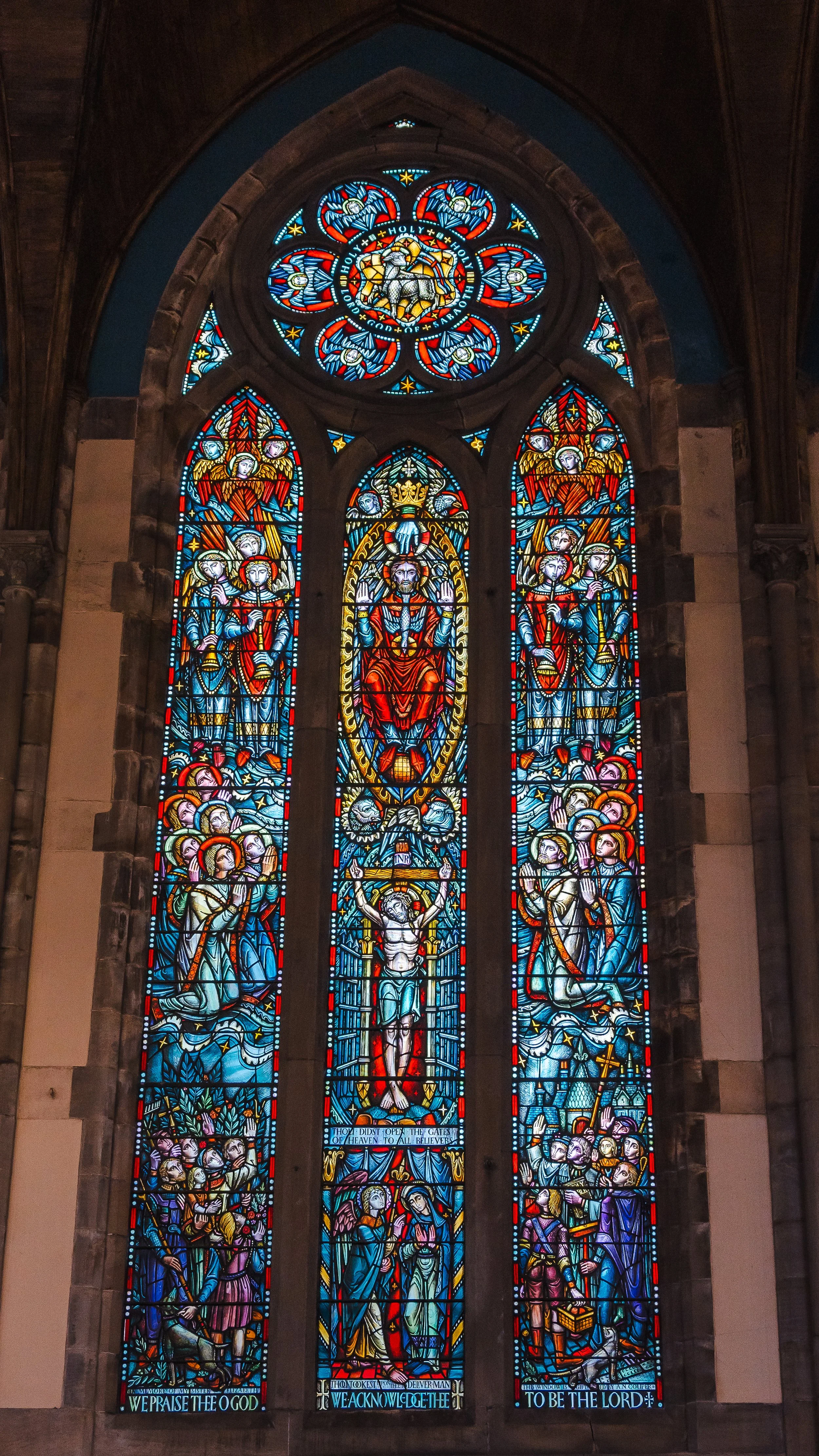
1. Te Deum Laudamus (by Sadie McLellan of Glasgow, 1958).
2. Jesus with the Rabbis in the Temple (by Cottier, 1903). Joseph, holding his staff, stands in the background and round the main picture are the heads of Moses, Joshua, Samuel and David.
3. Jesus Talks to the Woman of Samaria at Jacob’s Well (by Cottier, 1903). Round about are the heads of the prophets Isaiah, Jeremiah, Ezekiel and Daniel.
4. Jesus Blessing the Little Children (by Sir Edward Burne-Jones, and built by Morris 1893). The lower panels show angels holding a scroll.
Congregational Unions
Kelvinside Hillhead’s present building on Observatory Road was originally Hillhead Church, and after a 1950 union with Belmont Church in Great George Street, now converted for residential use, it became Belmont and Hillhead. A further union in 1978 with Kelvinside (Botanic Gardens) Church, now Oran Mor, brought about its present title. The parish was extended when Belhaven Westbourne Church closed.